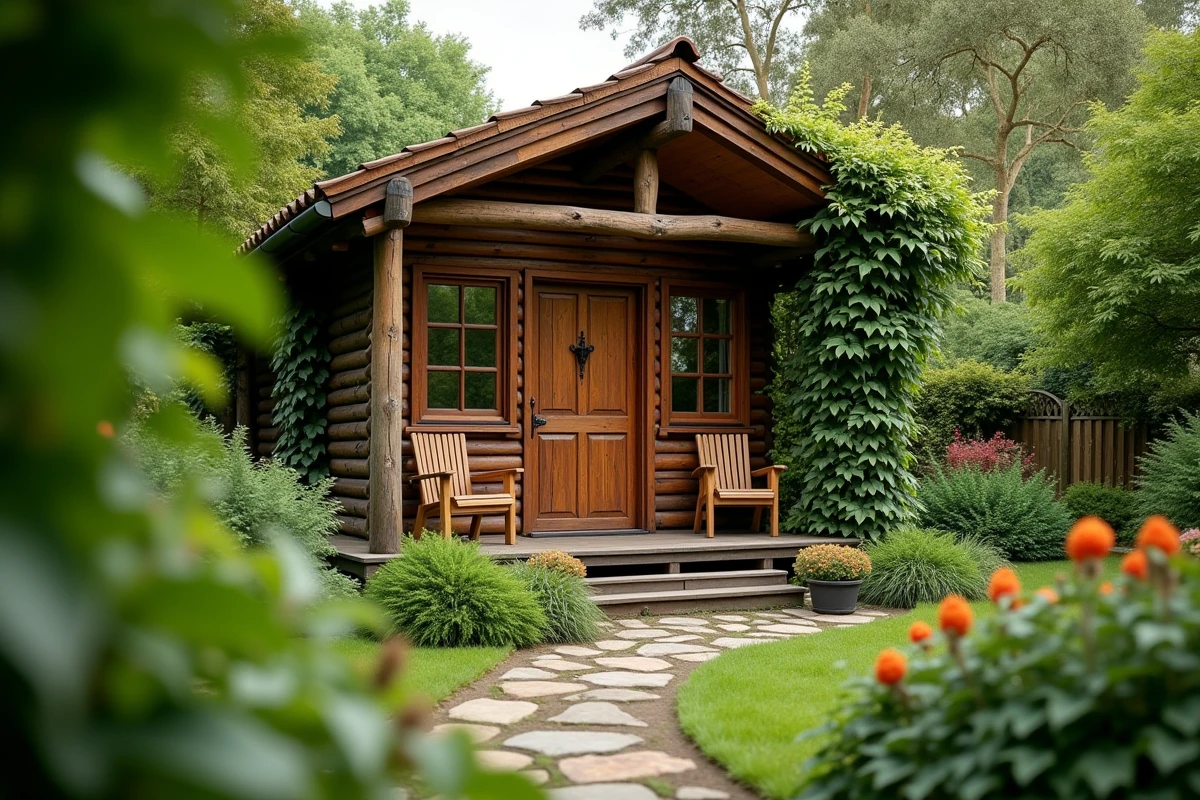
When you receive a garden shed delivered in a kit, the first instinct is often to stack a lawnmower, bags of potting soil, and loose tools inside. The problem arises six months later: the door no longer closes, humidity sets in, and the space becomes unusable. Setting up a shed in your garden means first deciding what you want to do with it before screwing in the first shelf.
Garden shed and electrical standards: the point that no one checks
Transforming a shed into an office, a guest room, or a DIY workshop almost always requires running electricity to it. You plug an extension cord from the house, add a space heater, and consider the matter settled.
However, several French home insurers (Maif, Groupama, MMA) updated their information notices between 2023 and 2025 to clarify a significant point: a dependency converted into a living space is only covered if its electrical installation complies with the NF C 15-100 standard and has been declared. In practical terms, a shed equipped with a non-compliant circuit may be excluded from coverage in the event of a claim.
Before thinking about decoration or furniture, an electrician should be called in to install a dedicated sub-panel, waterproof outlets, and an appropriate residual current device. This step represents a real cost, but it conditions everything else in the setup. The shed models offered on kabanes.com often include pre-drilled holes and conduit passages that facilitate this step.
Garden office shed: insulating to work year-round
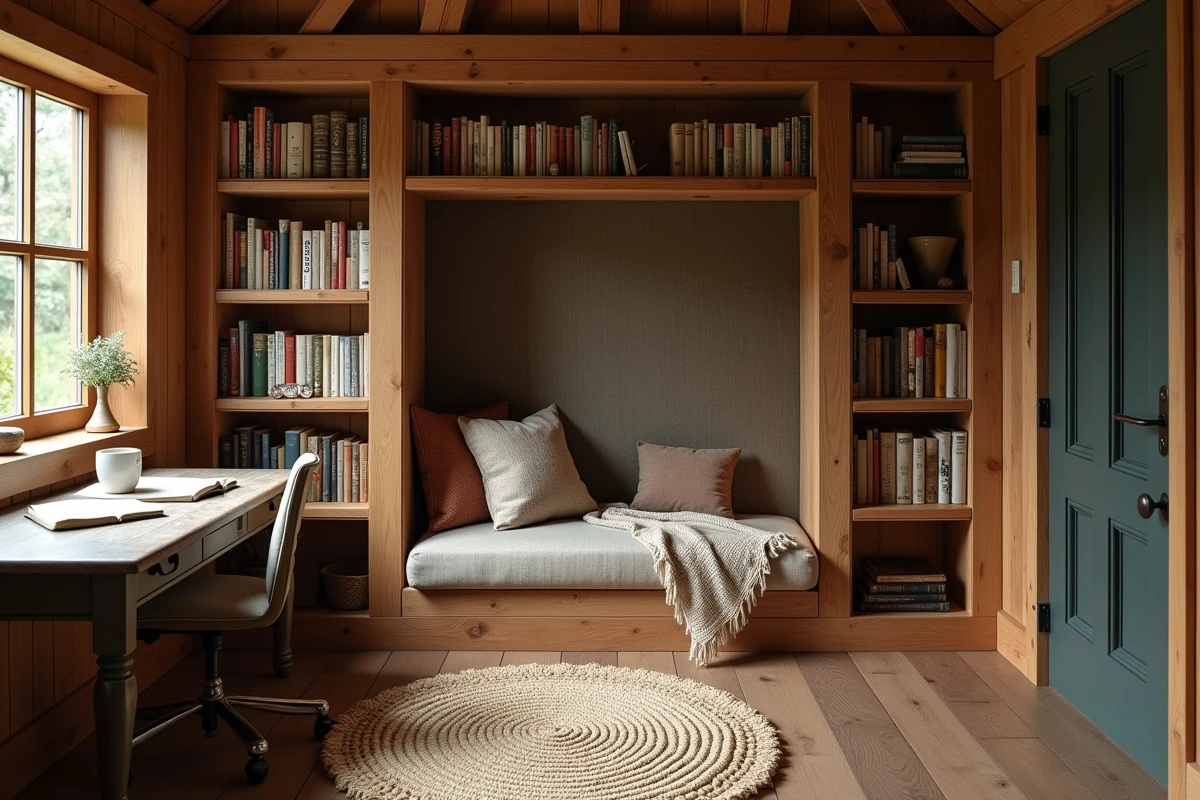
The ADEME Garden Observatory (2024 barometer) ranks outdoor micro-workspaces among the three fastest-growing garden uses since 2021. The shed-office is no longer a gadget: it is a workspace that must function in January as well as in July.
The turning point is insulation. Without it, the wooden shed becomes a sauna in summer and a fridge in winter. Interior insulation is preferred, using rigid panels placed between the frame studs, covered with a vapor barrier and then clad in paneling or painted OSB.
Elements to consider for a functional office
- Double glazing on openings, even small ones, to cut thermal bridges and reduce noise disturbances from the neighborhood
- Mechanical ventilation or at least a high grille and a low grille to avoid condensation that damages the wood from the inside
- A stable and insulating floor covering (click PVC tiles or floating laminate on an underlayment), rather than a raw floor that transmits cold from the ground
- Sufficient natural lighting: at least one window facing the work surface, complemented by a neutral light LED wall lamp
Insulating the walls and roof transforms a storage shed into a true living space. Feedback varies on the ideal thickness of the panels, but a minimum of 40 mm of wood wool or polyurethane is enough to make the space comfortable in most French regions.
Designing an accessible shed: a still rare design angle
Since the update of the NF EN 17210/A1 standard published by AFNOR in 2023, accessibility recommendations for lightweight garden constructions are explicitly harmonized with those for buildings. Passage width, threshold height, type of coverings: it is possible to design a garden shed accessible to people with reduced mobility without sacrificing style.
In practice, this starts with the access ramp. A standard door threshold of a few centimeters is enough to block a wheelchair or hinder an elderly person with a walker. The protruding threshold is replaced by a gentle slope made of composite wood or smooth concrete, integrated into the design of the outdoor terrace.
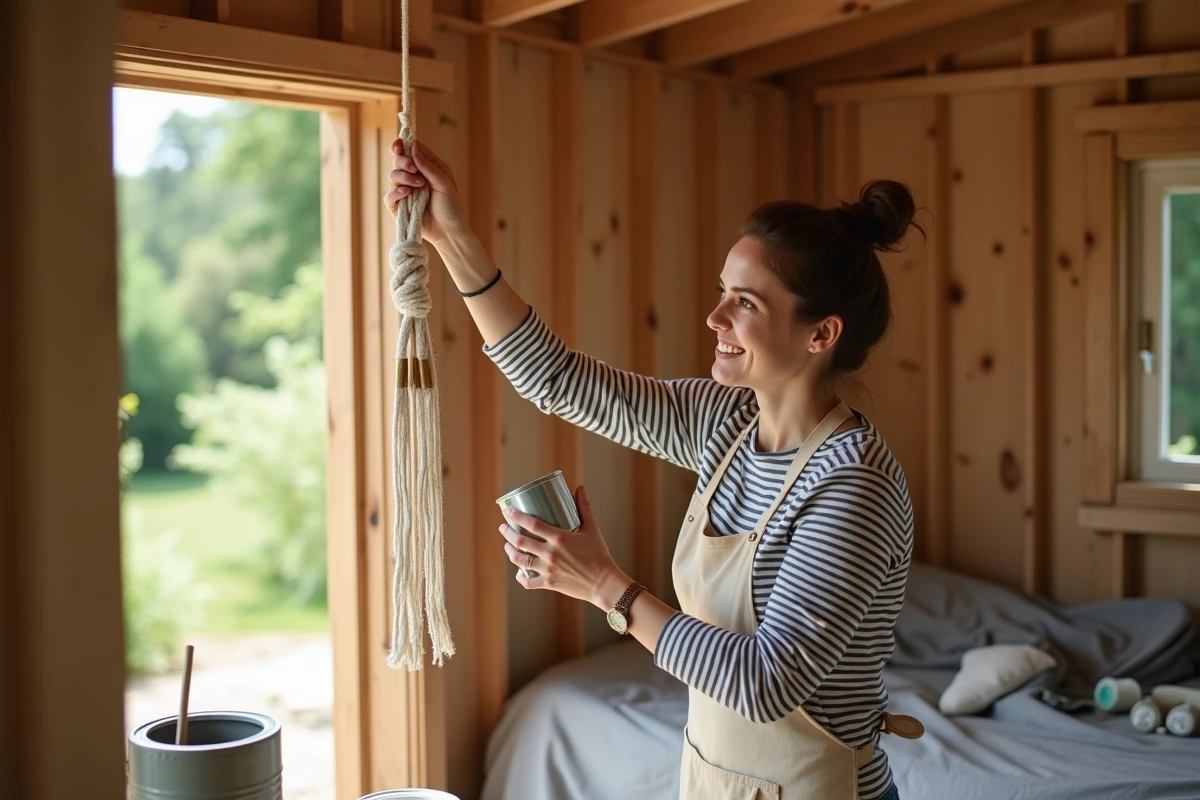
Inside, opt for a door at least 90 cm wide and a free rotation space. The floor must be flat, without bumps, with a non-slip covering. These constraints do not limit creativity: they guide towards a clean design and an open space that benefits all users, not just people with disabilities.
Relaxation and workshop shed: two setups, two logics
You often see the same lists: lounge shed, gym shed, bar shed. Instead of skimming through ten possibilities, let’s focus on two uses that require opposing technical approaches.
Relaxation space with terrace
The goal here is sensory comfort. We work on light (low-voltage LED strings, sheer curtains on an exterior rod), textiles (water-repellent cushions, outdoor rugs), and continuity between indoors and outdoors. A terrace extending from the shed doubles the usable area without a permit as long as it remains uncovered and below the declarative threshold.
The choice of wood matters: a cladding of Douglas or larch naturally grays and gives an elegant style without heavy maintenance. We avoid dark stains that absorb heat and peel in two seasons.
DIY or gardening workshop
Here, the logic is strictly functional. The floor must withstand shocks and splashes (epoxy resin or garage PVC tiles). The walls accommodate perforated panels for hanging tools, and a workbench fixed to the supporting structure.
- Provide an outdoor water point nearby to clean tools and pots without dirtying the interior
- Install adjustable lighting above the workbench, such as an articulated LED strip
- Store phytosanitary products in a ventilated and locked cabinet, separate from the rest of the space
A common mistake in a shed workshop is to underestimate vertical storage. Shelves fixed up to the ridge utilize the entire height under the slope, a volume that most owners completely overlook.
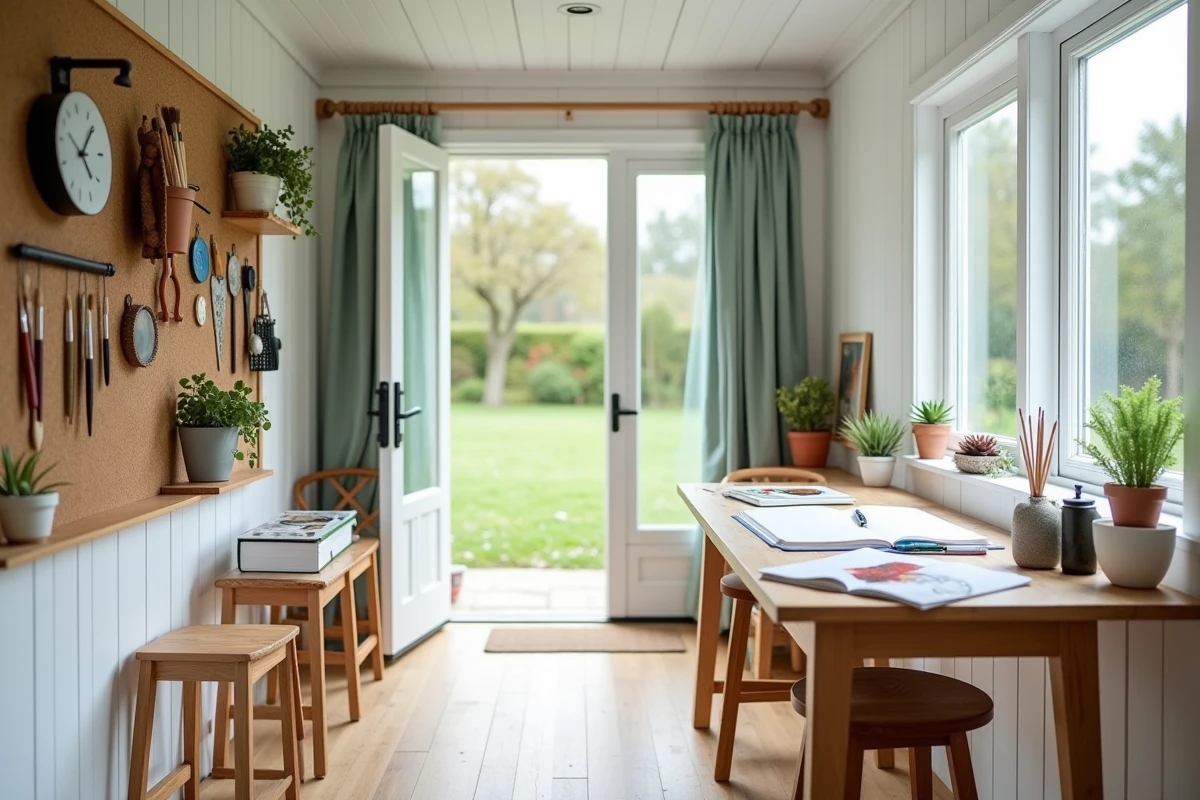
Regardless of the chosen use, the choice of shed model influences the entire setup: a solid frame with sufficient sections allows for the attachment of heavy loads, while a budget shelter made of thin panels limits possibilities. The initial investment in a quality solution, whether solid wood or composite, pays off over the lifespan and versatility of the shed.