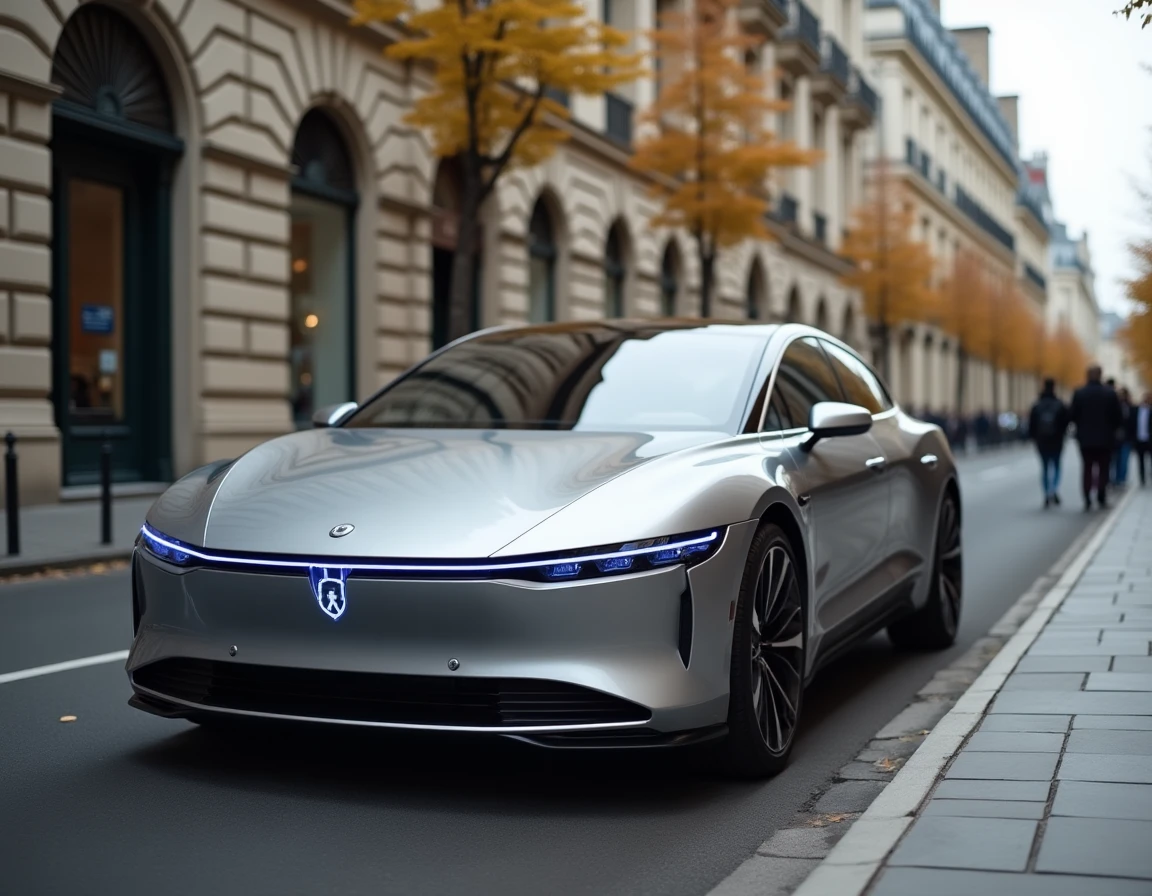
Driving a hybrid in 2024 no longer means choosing between two or three models like it did ten years ago. The range has expanded to the point where comparison is difficult, especially when tax rules change from year to year. Understanding what truly distinguishes the technologies from one another helps avoid a poorly calibrated purchase in relation to your daily commutes.
Rechargeable or non-rechargeable battery: the criterion that changes everything on your bill

Before going through a list of models, ask yourself a simple question: do you have a place to plug in your car every night? The answer leads to two very different families.
A full hybrid (HEV) charges its small battery on its own by recovering energy during braking. It runs in electric mode for a few kilometers in the city, then the thermal engine takes over. No plug needed.
A plug-in hybrid (PHEV) has a much larger battery. Plugged into a household outlet or charging station, it can cover several dozen kilometers without consuming a drop of gasoline. For short home-to-work trips, actual consumption drops dramatically.
The trap: a PHEV that is never charged behaves like a thermal vehicle weighed down by the weight of its battery. Consumption then rises above that of an equivalent full hybrid. Consulting the ranking of the best hybrid cars helps identify models whose electric range truly matches daily use without systematic charging.
CO₂ penalty and hybrid taxation: what has changed since 2024
Hybrids have long benefited from favorable tax treatment. This framework is evolving rapidly.
Since 2024, the scales for the CO₂ penalty, the TVS, and associated tax benefits have become less favorable to heavy PHEVs whose electric range remains modest or whose emissions exceed a certain threshold. A large plug-in hybrid SUV with limited electric range loses some of its advantage compared to a lighter compact full hybrid.
This trend is not just French. Europe is tightening the conditions for the approval and classification of so-called “low emission” vehicles, pushing manufacturers to increase the actual electric share of their PHEVs. Specifically, before signing an order form, check three elements:
- The exact amount of the penalty applicable to the targeted model, updated each year on January 1
- Potential eligibility for a conversion bonus, the conditions of which are tightening for plug-in hybrids
- The registration fee in your region, with some local authorities still offering partial or total exemptions for hybrids
A model that looks appealing on paper can lose several hundred euros in tax advantages from one year to the next. Checking the tax implications before choosing the model avoids unpleasant surprises.
Used hybrids: the segment on the rise in 2026
The reduction of purchase aids for new vehicles, combined with tax revisions that came into effect in early 2026, has made the used hybrid market significantly more attractive. Several reliable and economical models are now available for under 10,000 euros.
Are you looking for a first hybrid vehicle without investing in new? Models like the Honda Jazz, Hyundai Ioniq, or Ford Mondeo hybrid regularly appear in listings at competitive prices. These models, designed around proven full hybrid systems, have the advantage of simpler mechanics than a PHEV (no large battery to replace).
The used hybrid market has become the most profitable area to access this technology without suffering the depreciation of new vehicles. Two points of vigilance remain to be monitored:
- The condition of the traction battery, which can be checked via a diagnostic at the brand’s dealership
- The maintenance history of the hybrid system, distinct from the regular maintenance of the thermal engine
- The coverage of the manufacturer’s warranty on electrical components, often longer than the general vehicle warranty
Actual consumption of a hybrid car: what the manufacturer’s figures do not show
The consumption values displayed at dealerships follow the WLTP cycle, a laboratory testing protocol. For a full hybrid, the gap with real driving remains moderate, on the order of a few tenths of a liter.
For a PHEV, the situation is very different. The WLTP cycle assumes that the battery is charged at the start of the test. If your actual usage does not allow for charging between each trip, the effective consumption can double compared to the announced value. A PHEV rated under 2 liters per 100 km can actually consume as much as a conventional gasoline engine when the battery is empty.
The best way to estimate your future consumption: calculate the share of your trips covered by the electric range of the model. If the majority of your daily travels fit within this range and you charge every night, the PHEV makes perfect sense. Otherwise, a Toyota or Honda full hybrid, known for their efficiency in real conditions, will be more suitable and cheaper to purchase.
The choice between full hybrid and plug-in hybrid ultimately depends less on the model than on your habits. A short home-to-work trip with a charging station at home favors the PHEV. Long and varied trips without the possibility of regular charging naturally lead to a compact and lightweight full hybrid, less dependent on charging infrastructure and more predictable in consumption over time.