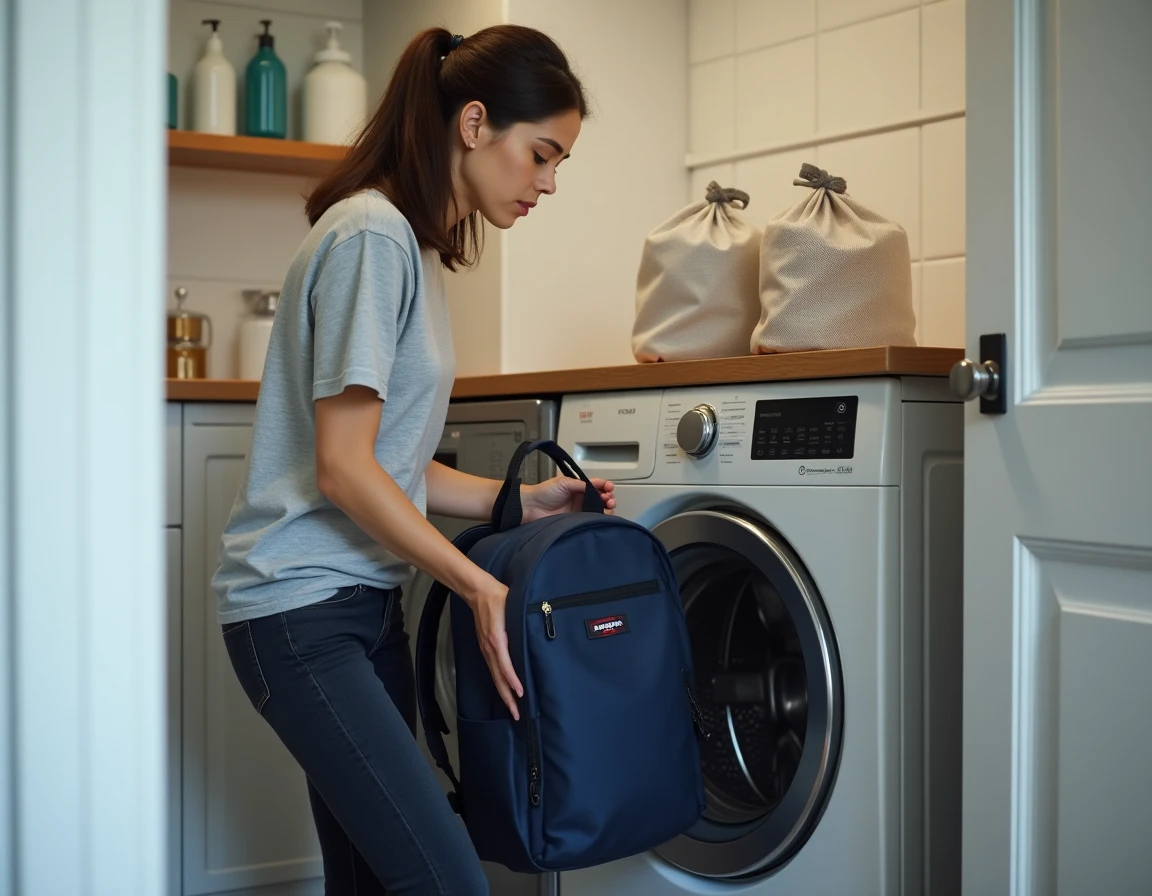
Washing an Eastpak bag in the machine seems simple, but the brand itself does not recommend this method. Its official care page advises localized cleaning with a soft cloth, lukewarm water, and mild soap. The question then arises: what washing machine parameters distinguish a bag that comes out intact from one whose seams, coating, or zippers deteriorate prematurely?
Localized cleaning or machine washing of an Eastpak bag: what each method preserves
| Criterion | Localized cleaning (recommended by Eastpak) | Machine washing |
|---|---|---|
| Inner coating | Preserved (no prolonged immersion) | Risk of delamination after several cycles |
| Zippers | No mechanical stress | Friction against the drum, possible wear |
| Reinforcements and internal foams | Intact (no twisting) | Deformation if spin is too strong |
| Deep odor removal | Limited (surface only) | More effective due to complete immersion |
| Embedded stains | Requires repeated brushing | Better result in one go |
| Time required | Few minutes | Full cycle + long air drying |
Localized cleaning is sufficient for regular maintenance. Machine washing is only justified when odors persist or stains resist surface treatment. To better understand the steps and wash an Eastpak bag without damaging it, the choice of program and preparation of the bag make all the difference.
Internal reinforcements and coating: the real weak points in the machine
The outer fabric of an Eastpak, usually made of Cordura polyester or nylon, withstands cold water well. It is not the source of the problem.
The inner coating is the first to suffer from machine washing. This thin layer of coating ensures the bag’s relative waterproofness. Prolonged immersion in hot water, combined with an aggressive detergent, accelerates its delamination. The result: small sticky flakes that settle on the contents of the bag.
The reinforcing foams (padded back, bottom of the bag) are the second weak point. High-speed spinning compresses them repeatedly and can deform their structure. Once compressed, this foam does not regain its original volume.
Zippers and adjustment straps
The metal sliders of the zippers hit against the drum during the cycle. On a long program, this repeated friction can dull the teeth of the zipper or weaken the adjacent fabric. The adjustment straps, if not secured, can tangle and create stress points on the seams.
Machine settings for an Eastpak bag: program, temperature, and spin
The choice of program directly affects the survival of the bag. Three parameters deserve special attention.
- Maximum temperature: cold water only. Hot water softens the coating and accelerates the fading of dyed fabrics. The “delicate” or “wool” program maintains gentle agitation suitable for technical textiles.
- Spin: reduce to the minimum available, or disable it completely. Standard spinning deforms the reinforcements and subjects the seams to centrifugal force for which they are not designed.
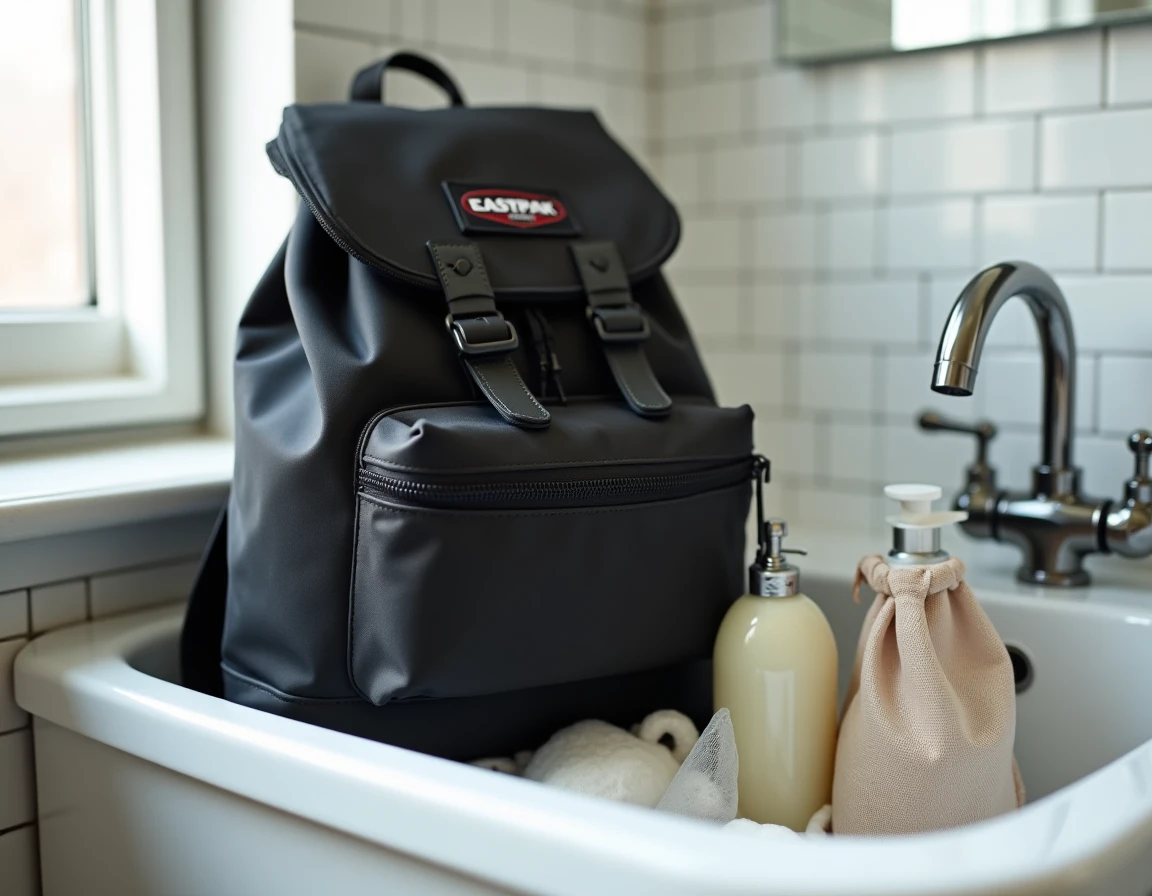
- Detergent: a small amount of mild liquid soap, without bleaching agents or fabric softeners. Fabric softeners leave a film that clogs the pores of the fabric and reduces its breathability.
Preparing the bag before the cycle
Emptying all pockets (including internal zippered compartments) seems obvious, but a forgotten pen or tissue can ruin the wash. Turning the bag inside out protects the outer face from direct friction against the drum.
Placing the bag in a pillowcase closed with a knot is the most effective precaution. This cover limits the impact of the metal sliders against the stainless steel of the drum and prevents the straps from wrapping around the central axis.
Closing all zippers before washing reduces the risk of fabric getting caught in the zipper teeth during agitation.
Drying an Eastpak bag after washing: common mistakes
The dryer is the main cause of irreversible damage, even more so than washing itself. The heat from the drum partially melts the coating, deforms plastic parts, and can shrink nylon straps.
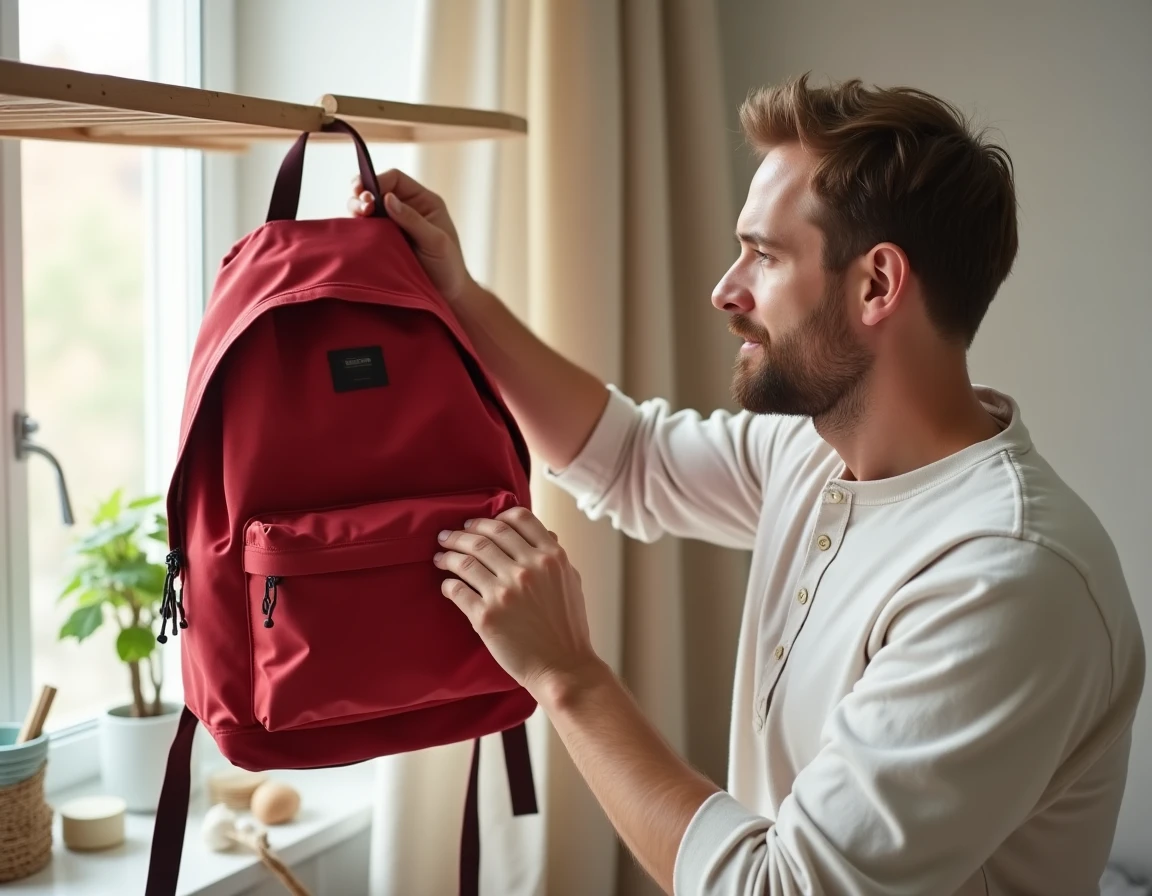
Air drying, with the bag turned inside out and hung upside down, remains the only reliable method. Opening all pockets and compartments speeds up the evaporation of moisture trapped in corners. Avoid direct sunlight exposure, which fades dyed fabrics.
Drying time and mold
A thick bag with back padding may take more than a day to dry completely. Storing a still damp bag in a closet encourages the development of mold and persistent odors. Sliding crumpled newspaper inside absorbs residual moisture and speeds up the process.
Eastpak warranty and machine washing: what the brand covers
Eastpak offers a limited warranty of up to 30 years. This warranty covers manufacturing defects, not wear related to improper maintenance.
A bag whose coating delaminates after several washes in hot water does not fall under a manufacturing defect. However, a seam that comes apart for no apparent reason remains covered. Machine washing does not void the warranty per se, but the damage it causes is not covered.
The brand’s logic prioritizes repair and gentle maintenance to maximize the product’s lifespan. Regular localized cleaning spaced with rare machine washes (once or twice a year, no more) represents the most reasonable compromise between hygiene and preservation of the bag.