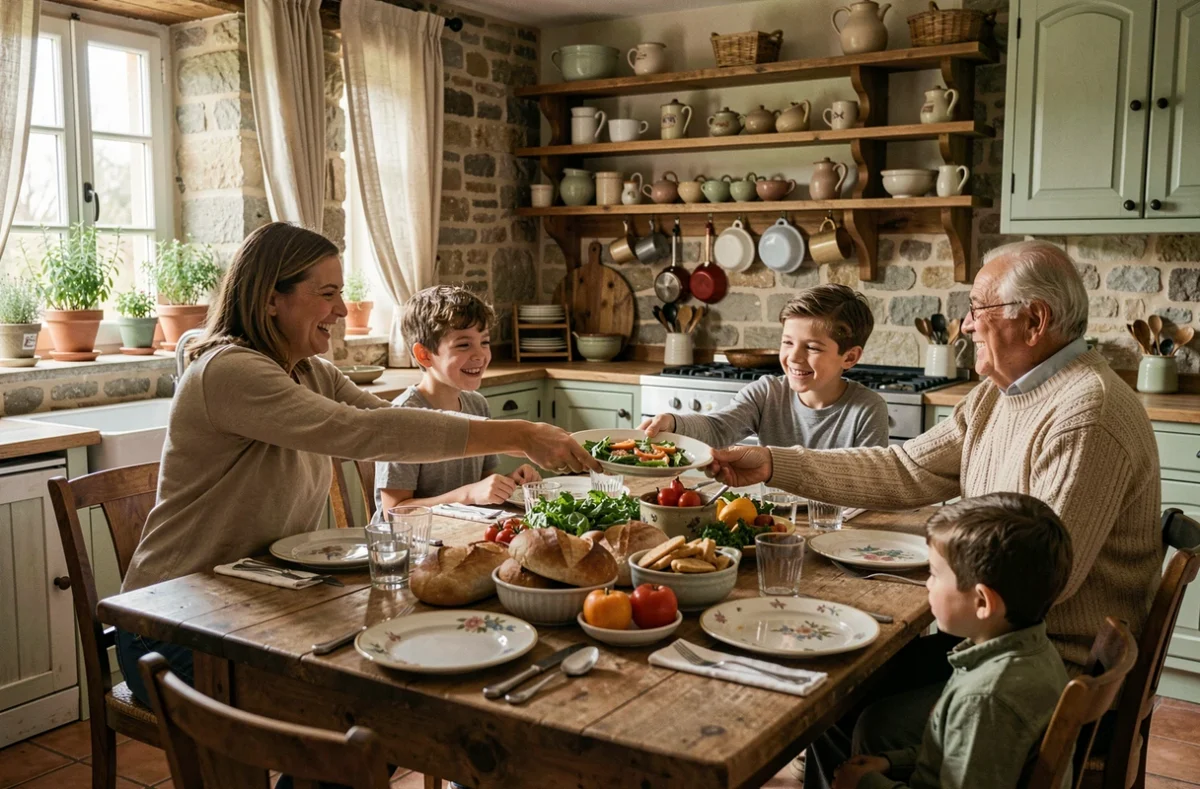
What measurable factors weigh the most on family balance on a daily basis? Between parental mental load, digital pressure related to school, and time spent in front of screens, the sources of tension in a thriving family life are not always what one might imagine. This article cross-references available data to identify the concrete levers that make a difference.
Parental digital stress: an invisible but documented burden
A report from IGÉSR published in June 2025 highlights a phenomenon rarely addressed in family life content: the proliferation of school platforms shifts part of the coordination work to parents. ENT, messaging systems, grade tracking apps, digital notebooks: each tool adds a layer of notifications and administrative tasks.
This observation, echoed by L’ADN in September 2026, shows that the stress reported by parents does not solely stem from domestic management. It also arises from a constant digital solicitation related to schooling, blurring the boundary between family time and school time.
Resources gathered on the Butterfly Mag family site allow for exploring different approaches to structuring these daily moments without letting digital logistics take over.
Setting specific time slots to consult these tools (for example, only once in the evening after dinner) reduces the feeling of constant availability. This rule applies equally to parents and children: a shared time frame around school-related digital use protects family time.
Screen recommendations by age: what current French guidelines say
Competing content often repeats that screens should be “limited.” The guidelines published by the French Ministry of Health, relayed by the public platform Je protège mon enfant, are more precise. The table below summarizes the criteria retained.
| Criterion | Under 3 years | 3-6 years | 6 years and older |
|---|---|---|---|
| Allowed exposure | Not recommended except with adult interaction | Accompanied, age-appropriate content | Supervised, duration discussed within the family |
| Screen in the bedroom | No | No | Not recommended |
| Before bedtime | No | No | Discouraged |
| Presence of an adult | Mandatory | Strongly recommended | Desirable depending on the content |
The French approach favors supervision rather than a single time threshold. A 4-year-old watching a documentary with a parent for twenty minutes is not in the same situation as a child alone in front of a tablet for the same duration.
The parental paradox regarding screens
Parental modeling remains the most coherent lever for establishing lasting habits. Putting down one’s own phone during meals or playtime sends a stronger signal than any rule imposed on children.
Family mental load: task distribution and impact on the couple
The mental load is not just a list of chores. It encompasses the planning, anticipation, and coordination of everything that keeps a household running. Several sources converge on the fact that this load still disproportionately falls on mothers.
- Meal planning, medical appointments, and extracurricular activities generate a constant cognitive workload, often invisible to the rest of the household
- Digital school tracking (grade reports, signatures, responses to teachers) adds to traditional domestic tasks and amplifies the overload
- The perceived imbalance in task distribution is a source of tension in couples, documented by several studies on parental couple dynamics in France
An explicit, formalized sharing (for example, via a visible chart in the kitchen) yields better results than a vague verbal agreement. Making task distribution visible reduces conflicts related to mental load.
Indoor children: the effects of lack of outdoor activity
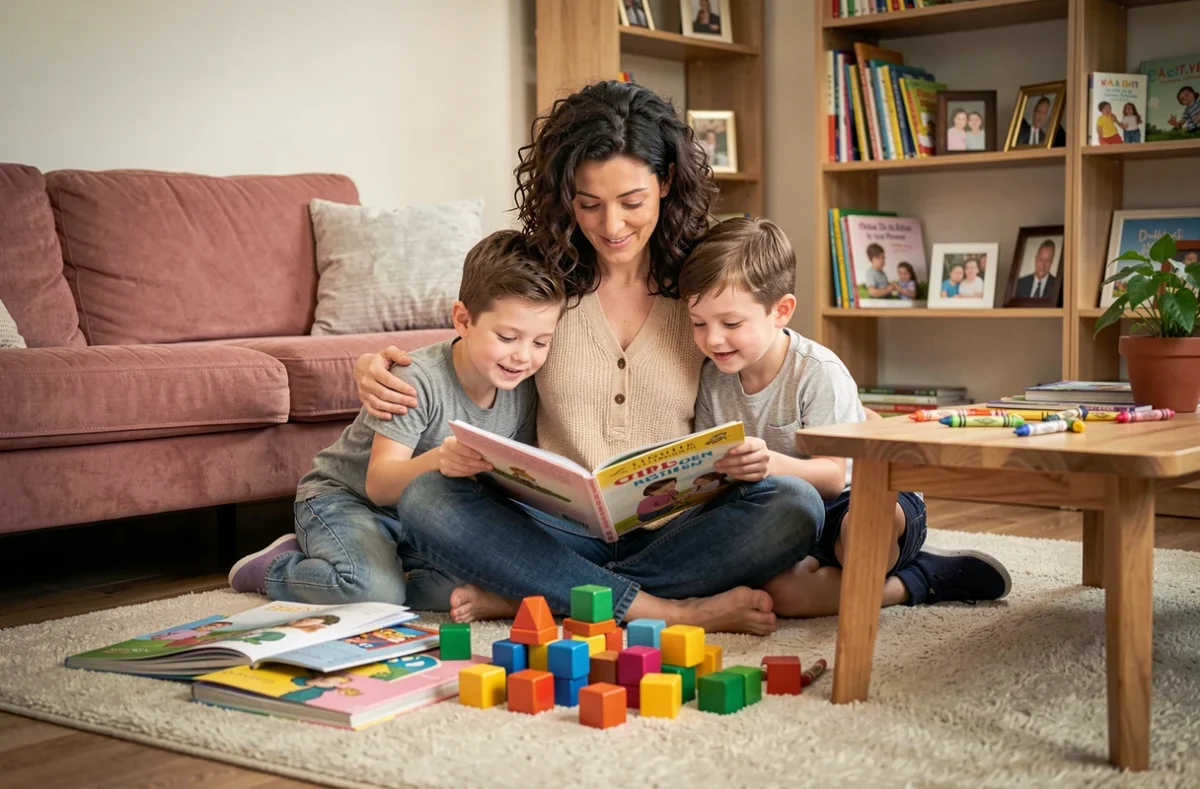
An article from DNA in September 2026 uses the term “indoor children” to describe a documented trend: between parental overprotection and the omnipresence of screens, children spend less time outdoors than they did twenty years ago.
Three concrete levers to reverse the trend
- Sanctuarize a daily time slot for free outdoor play, even if short, without educational objectives or structured supervision
- Accept a reasonable level of risk (climbing a tree, running in a park) to develop motor autonomy
- Offer family outdoor activities on weekends that are not “consumer” outings (hiking, gardening, neighborhood exploration)
Free outdoor play develops skills that structured activities cannot replace. The challenge for a thriving family life is not to multiply activities, but to preserve spaces where the child can experiment without a program.
The available data paints a convergent picture: the quality of family life depends less on relational recipes than on structural choices regarding digital use, the distribution of responsibilities, and the relationship with outdoor time. Acting on these three axes produces more lasting effects than an accumulation of generic advice.