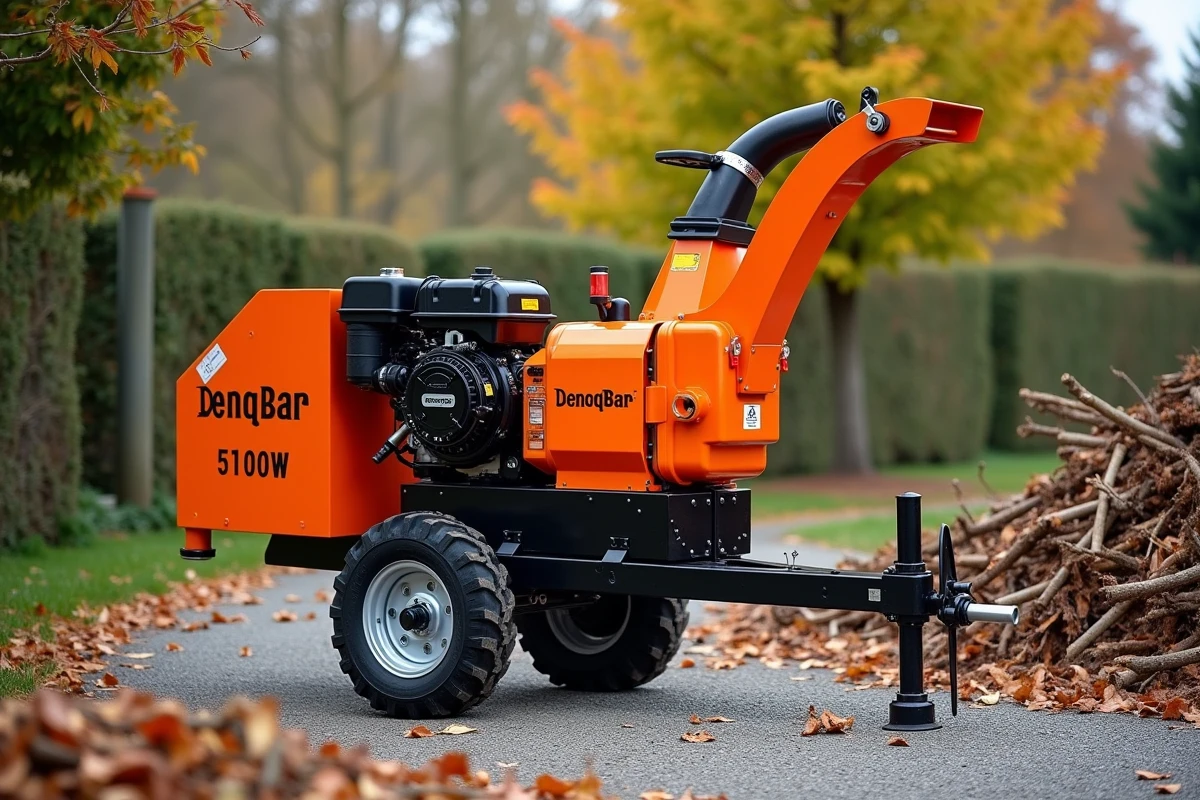
The Denqbar 5100W is a thermal garden shredder whose motorization places it among the most powerful models available without professional status. Its dual feeding zone and blade cutting system allow it to handle branches of significant diameter while producing fine mulch, reusable for mulching or composting.
Noise and burning regulations: why a powerful thermal shredder changes the game
The ban on burning green waste, confirmed by numerous prefectural orders and relayed by ADEME, affects the majority of French departments. For owners of large gardens, the shredder becomes the main legal tool for reducing pruning volumes. A model capable of quickly absorbing thick branches reduces the number of sessions and, consequently, the time exposed to noise.
Noise remains a point of friction. The practical sheets from Service-public.fr remind us that the user of a shredder can be fined even if the device bears the CE marking, as long as the nuisance is deemed repeated or outside authorized time slots. Most municipalities limit the use of motorized gardening equipment to weekday mornings and restricted time slots on weekends.
Before purchasing a thermal shredder, consulting the local municipal or prefectural order is not a luxury, it is a necessity. You can cross-reference various feedback and consult a review of the Denqbar 5100W shredder to gauge users’ feelings on this specific point.
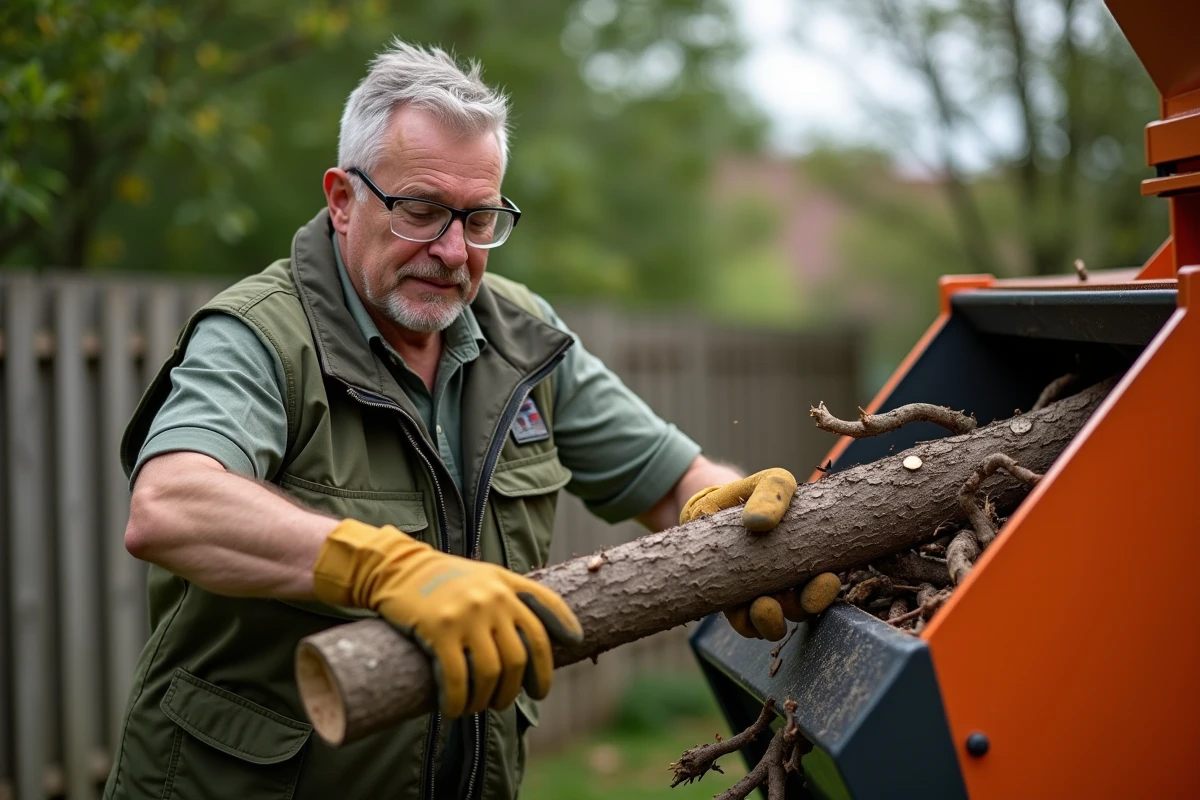
Engine and cutting system of the Denqbar 5100W: technical operation
The thermal engine of the Denqbar develops a high nominal power, allowing it to maintain a stable cutting speed even when the wood offers significant resistance. Unlike an electric shredder whose torque drops on green or wet branches, the thermal unit maintains its rotation speed without noticeable jolts.
Dual feeding zone and blades
The Denqbar 5100W features two distinct inlets. The first, a wide funnel, accepts soft twigs and foliage in volume. The second, narrower, guides rigid branches towards the blades with an optimized attack angle.
This system significantly reduces jams. The blades produce a fine and homogeneous mulch, directly usable as mulch at the foot of flower beds or integrable into a composter. The particle size obtained is much more consistent than that of a rotor shredder, which tends to crush rather than cut.
Thermal or electric shredder for a garden: concrete selection criteria
The choice between thermal and electric is not just about raw power. Several parameters determine the relevance of one or the other depending on the garden profile and intended use.
- Area and distance from the power supply: a large garden, with hedges far from the house, makes the thermal model more practical than an electric extension cord of several dozen meters, which can cause voltage drops and risk of disconnection.
- Diameter of branches to be processed: electric shredders generally have a modest diameter limit. The Denqbar accepts significantly wider sections, which avoids pre-cutting.
- Frequency of use and maintenance: a thermal engine requires oil changes, spark plug replacements, and air filter cleaning. For occasional use (two to three times a year), this maintenance cost remains marginal. For weekly use, it weighs more heavily.
- Noise nuisance: the thermal model is noisier than a comparable electric model. Authorized time slots become a real constraint in dense housing developments.
For a medium to large wooded area, the Denqbar 5100W covers a range of vegetation that few electric models can match. However, in a small urban garden, a silent electric shredder will be more suitable for regulatory context and neighborhood considerations.
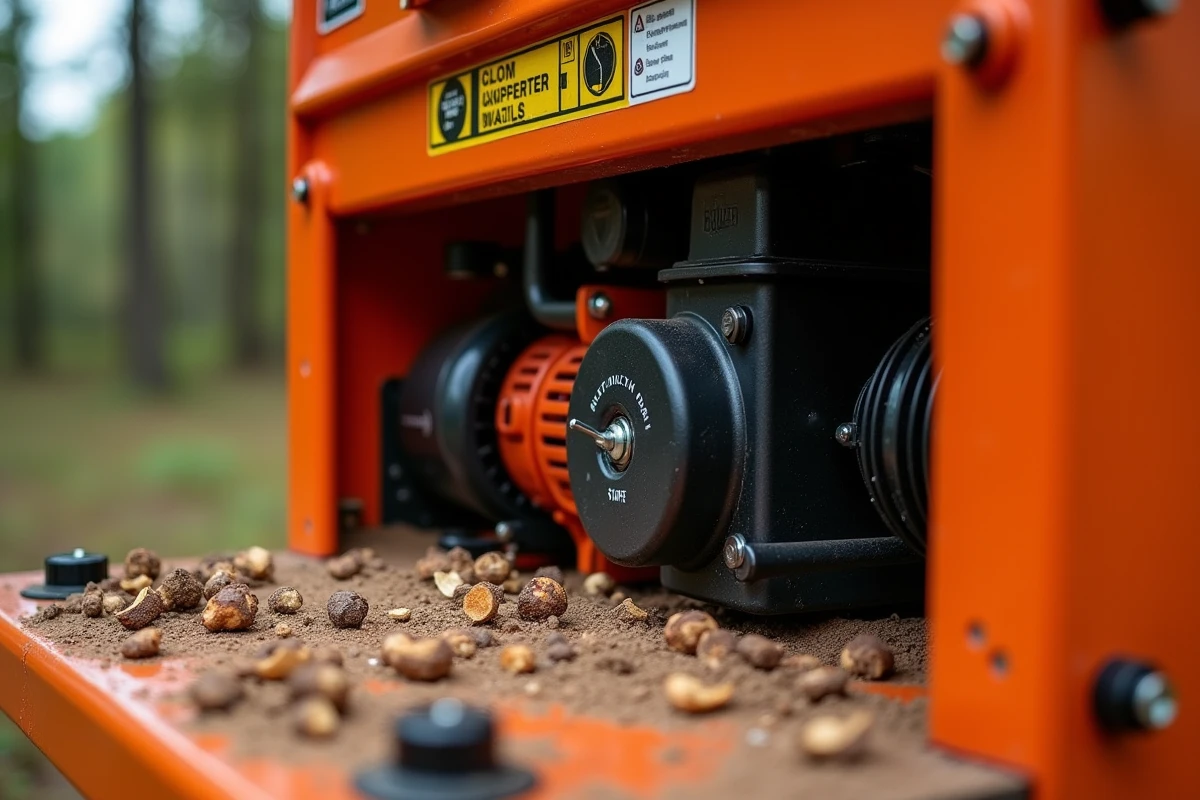
Reliability of the Denqbar 5100W: points of attention after several seasons
The robustness of a shredder is measured over time, not in a single session. The metal chassis of the Denqbar absorbs the vibrations of the thermal unit without notable deformation. The wheels allow for decent movement on flat terrain, but their size limits maneuverability on soft or sloped ground.
Absence of a collection bin
The Denqbar 5100W is delivered without a collection bin. This is its main drawback. You need to provide a garden bag or a wheelbarrow positioned under the discharge chute. During prolonged shredding, the accumulation of mulch on the ground forces you to interrupt work to clear the area. An integrated bin would have avoided this repetitive handling.
Performance on wet vegetation
Wet or freshly cut branches produce more sticky residues. The Denqbar’s blades remain effective on wet wood, but the discharge chute may clog more quickly. A quick cleaning between batches of branches limits this phenomenon. After each session under humid conditions, drying and oiling the blades significantly extends their lifespan.
Safety of the Denqbar shredder: devices and precautions
The Denqbar includes an automatic stop system in case the casing is opened, as well as a blade brake. These devices comply with safety requirements for domestic shredders.
User protection does not rely solely on the device. Glasses, reinforced gloves, and hearing protection remain mandatory. The power of the thermal engine projects chips with more energy than that of an electric model, making safety glasses non-negotiable, even for a few minutes of use.
The Denqbar 5100W is aimed at garden owners who regularly handle significant pruning volumes and thick branches. The absence of a bin remains its only real weakness, compensated by a quality of mulch and cutting power that is hard to match in this price range. Checking the authorized time slots in the municipality before the first start-up will prevent an unpleasant surprise with the neighbors.