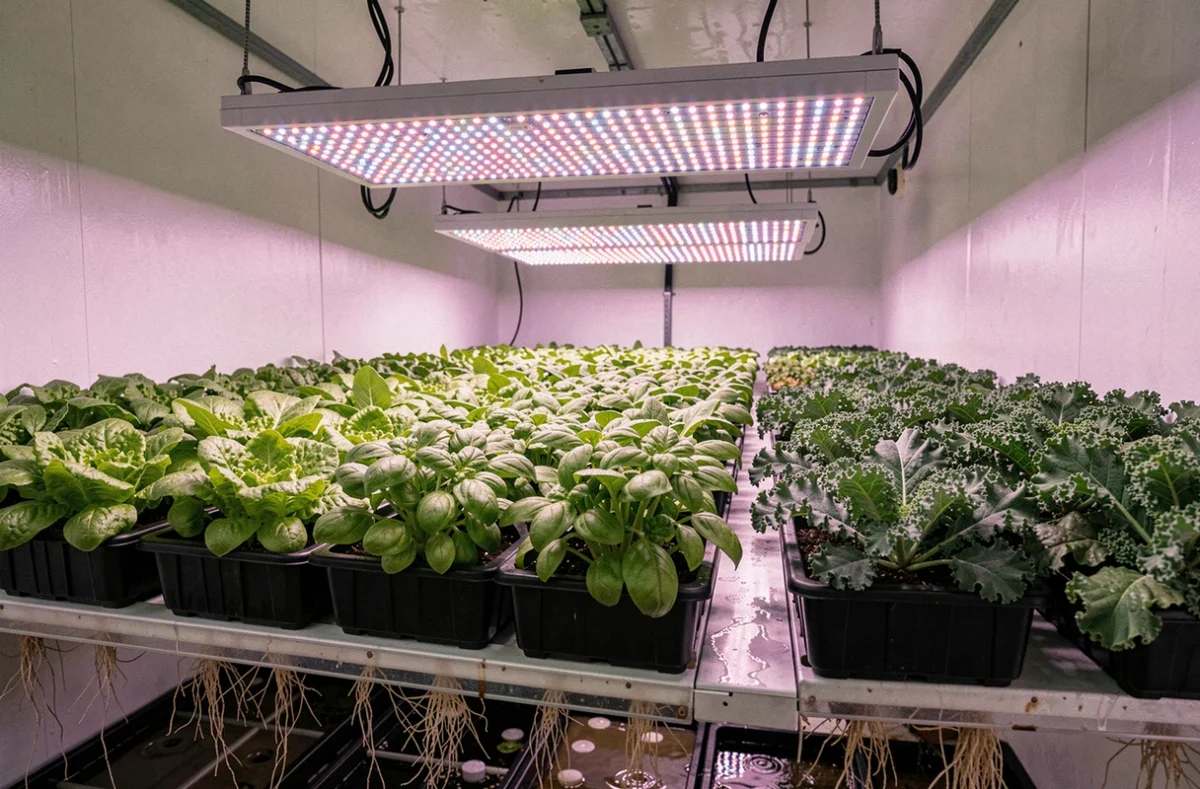
A professional horticultural LED differs from consumer lighting by its ability to emit a light spectrum calibrated for the photosynthetic needs of plants. At VGD (Vegetal Grow Development), a French manufacturer based in Provence, this calibration goes further: it incorporates software control through artificial intelligence that adjusts the light in real-time according to the crop, growth phase, and ambient conditions.
Biochemical signatures: the horticultural LED beyond watts
Typical content on horticultural lighting compares electrical powers. So many watts in HPS, so many in LED, followed by a calculation of savings. This approach ignores a recent paradigm shift.
Since 2026, the most profitable producers think in biochemical signatures rather than watts. The principle: target specific wavelengths to trigger metabolic responses in the plant, not just provide light.
VGD published a market analysis in September 2026 indicating that finely targeted LED spectra can increase antioxidant activity by 18 to 19% and overall productivity by up to 33%. This means that the fixture does not simply replace the sun. It directs the biochemical quality of the plant: taste, texture, nutrient content, shelf life.
For a professional selling aromatic plants, young plants, or greenhouse vegetable crops, the difference is directly reflected in revenue and yield per square meter. Choosing a professional horticultural LED VGD on Botagora aligns with this logic of qualitative control, not just a search for energy savings.
Custom VGD spectrum: how crop control works
A VGD HPL series fixture, made of cold-forged aluminum 1070, offers power ranging from 200 to 1,500 watts with an efficiency exceeding 4.2 µmol/J. This photonic efficiency places these fixtures above older HPS references and many entry-level LEDs.
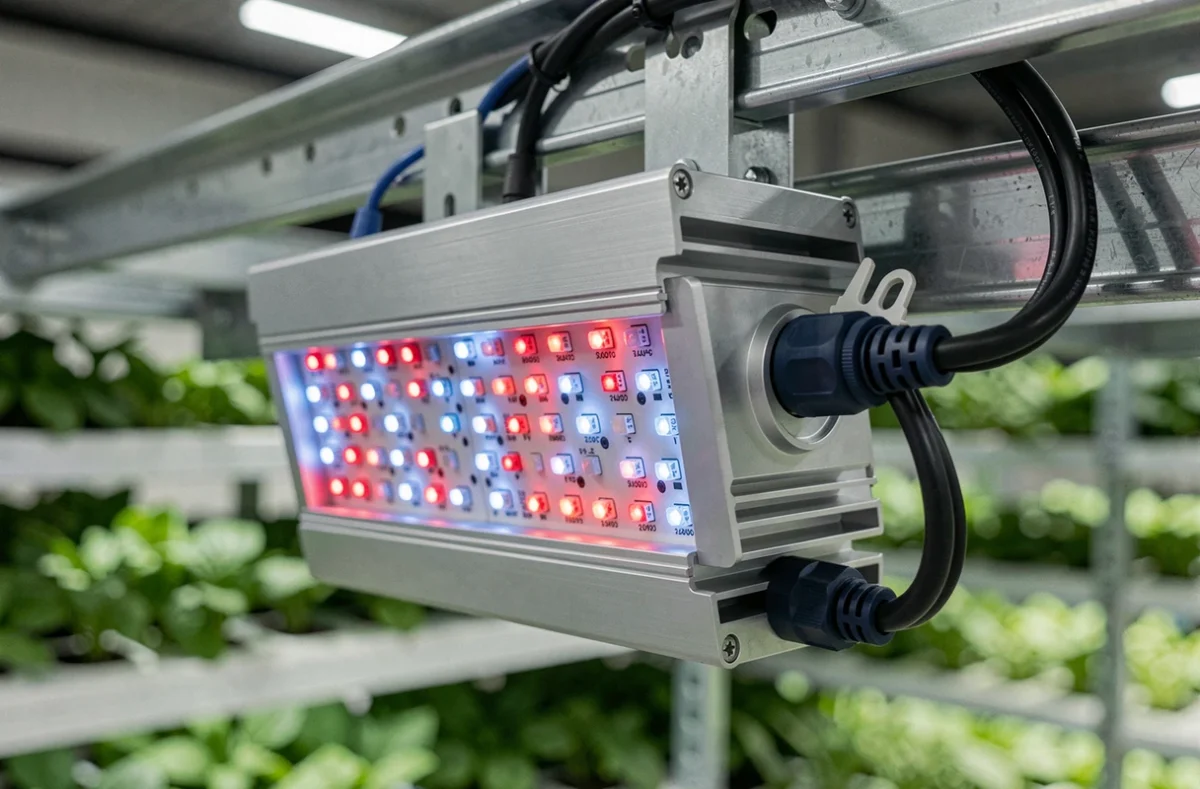
The technical feature lies in spectral modularity. HPL fixtures are available with 1 to 4 independently controllable channels. Each channel corresponds to a band of wavelengths. By combining these channels, the system composes a spectrum tailored to each growth stage: germination, vegetative phase, flowering, maturation.
From standard spectrum to customized spectrum
VGD offers ready-to-use standard spectra, as well as custom spectra defined with their technical teams. This approach relies on internal testing and partnerships with plant R&D centers.
The embedded software adjusts the lighting in real-time using sensors and artificial intelligence. The system complements natural light: when sunlight decreases, the lighting automatically compensates. When it increases, consumption decreases. This dynamic control reduces the energy bill without manual intervention.
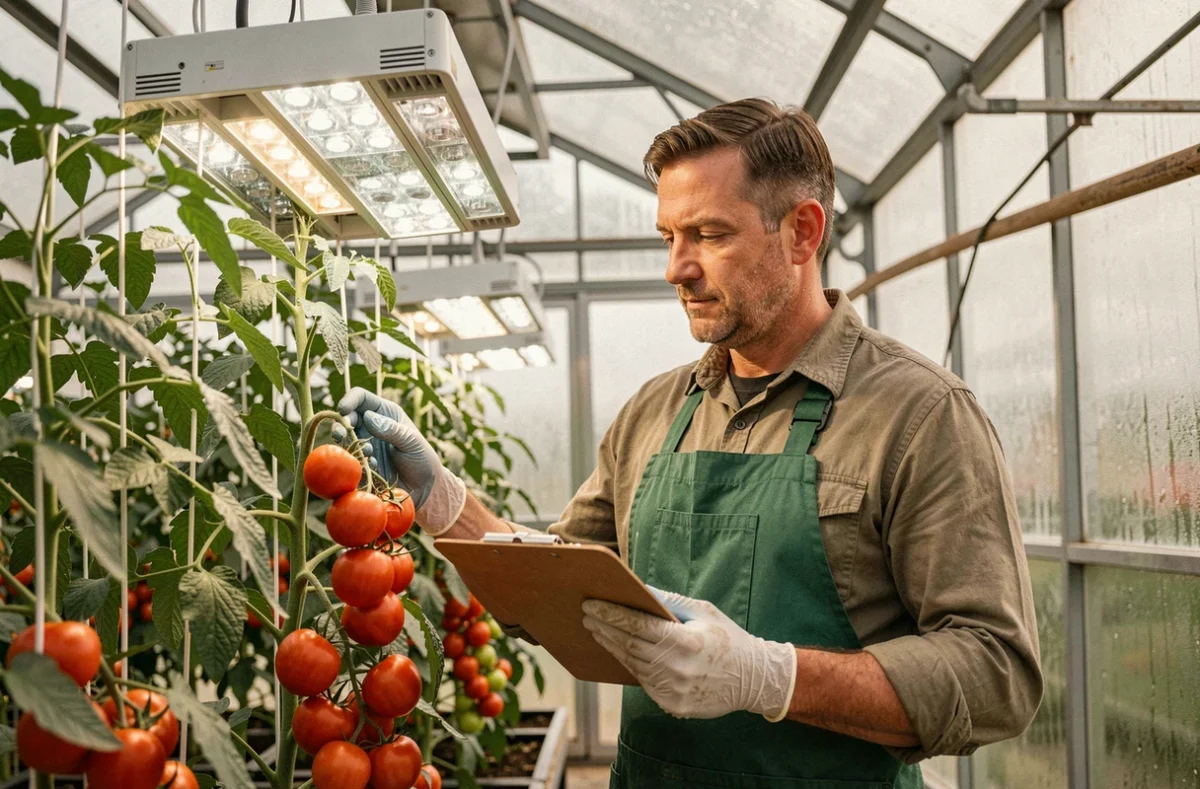
- The HPL series is suitable for large greenhouses and indoor spaces, with power adjustable according to crop density.
- The Racklight model, made of anodized aluminum in a strip design, targets shelf cultivation and in vitro, where vertical space is limited.
- Lighting scenarios can integrate real-time energy prices to optimize operating costs hour by hour.
Transition from HPS to VGD horticultural LED: what changes in the greenhouse
Replacing HPS lamps with LEDs is not just changing a bulb. The heat emitted by HPS contributed to heating the greenhouses. By removing this heat source, it is sometimes necessary to revisit the thermal regulation system.
With VGD fixtures, the residual heat is significantly lower, which presents a direct advantage: plants no longer experience localized thermal stress under the lamps. The temperature of the plant cover remains uniform, reducing the need for certain inputs related to stress management.
Return on investment and sustainability
LEDs have a significantly longer lifespan than HPS, which decreases the frequency of replacement and maintenance costs. VGD deploys its turnkey systems (hardware and software) in just a few days, regardless of the existing setup. The manufacturer handles integration with already installed systems, whether they are HPS-equipped greenhouses or indoor spaces.
The transition is also justified by the ability to optimize production cycles year-round: crop rotation, early germination, extending productive periods. Intelligent control eliminates dependence on seasons and sunlight variability.
Professional horticultural LED made in France: a technical choice criterion
VGD manufactures its fixtures in Provence. This is not a marketing argument but a technical parameter. Geographic proximity allows for responsive support, quick interventions, and complete traceability of components.
- The fixtures are designed for demanding professional environments: moisture resistance, compatibility with greenhouse climate management systems, certification to French and European standards.
- Support includes a consulting phase with VGD experts to define the spectrum suitable for each type of crop.
- The control software can operate in conjunction with or as a complete replacement for natural light, with regular updates incorporating field feedback.
The horticultural lighting market is evolving towards systems where the fixture is just one element of a software-sensor-spectrum ensemble. Producers investing today in a professional VGD horticultural LED are not simply choosing a more energy-efficient lamp. They are adopting a tool for controlling plant quality, calibrated for each crop and each phase, with a French manufacturer capable of adapting the spectrum to their yield and organoleptic quality objectives.